48° 15′ N, 6° 30′ O48.2441666666676.5063888888889Koordinaten: 48° 15′ N, 6° 30′ O
Höhe
322–400 m
Fläche
5,93 km2
Einwohner
187 (1. Januar 2015)
Bevölkerungsdichte
32 Einw./km2
Postleitzahl
88000
INSEE-Code
88133
Rathaus- und Schulgebäude
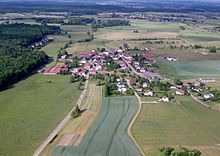
Dignonville ist eine französische Gemeinde mit 187 Einwohnern (Stand 1. Januar 2015) im Département Vosges in der Region Grand Est (bis 2015 Lothringen). Sie gehört zum Arrondissement Épinal, zum Kanton Épinal-2 und zum Gemeindeverband Agglomération d’Épinal.
Inhaltsverzeichnis
1Geografie
2Geschichte
2.1Bevölkerungsentwicklung
3Sehenswürdigkeiten
4Weblinks
Geografie |
Dignonville
Die Gemeinde Dignonville liegt etwa drei Kilometer nordöstlich von Épinal. Nachbargemeinden sind Villoncourt im Nordosten, Sercœur im Osten, Longchamp im Südosten, Jeuxey im Süden, Dogneville im Südwesten, Girmont im Westen und Bayecourt im Nordwesten.
Geschichte |
Der Ort wurde im 11. Jahrhundert Dinovilla bezeichnet, weitere Namen waren Denovelle (1336), Daigneville (1393) und Degnonville (1494).
Bevölkerungsentwicklung |
Jahr
1962
1968
1975
1982
1990
1999
2006
2014
Einwohner
123
120
113
174
179
171
188
188
Sehenswürdigkeiten |
Kirche Saint-Vincent aus dem 16. Jahrhundert
Kapelle
Vier Steinkreuze
Kirche Saint-Vincent
Weblinks |
Commons: Dignonville – Sammlung von Bildern, Videos und Audiodateien
Dieser Artikel erläutert die Landwehr als Befestigungsanlage; zu anderen Bedeutungen siehe Landwehr (Begriffsklärung). Frankfurter Landwehr um die Stadt, zwischen 1712 und 1714 (Kupferstich von Johann Baptist Homann, Gebietsgrenzen korrigiert nach Friedrich Bothe) Ehemaliger Wartturm der Hannoverschen Landwehr und spätere Windmühle auf dem Lindener Berg, Merian-Stich von 1654 Mit Landwehr , Landgraben und Landhege werden Grenzmarkierungs- bzw. Grenzsicherungswerke und Umfriedungen von Siedlungsgebieten mit dem Recht der Einhegung oder ganzen Territorien bezeichnet. Diese Siedlungsschutzanlagen werden zumeist ins Hoch- und Spätmittelalter datiert und besitzen in Einzelfällen Längen von über hundert Kilometer. Vergleichbare Erdwerke werden jedoch bereits seit der Antike erwähnt. [1] Der römische Limes ist die bekannteste Ausführung einer frühen Landwehr. Auch das Danewerk gehört zu dieser Gruppe von Sperrwerken. Diese Landwehren sind in manchen Regionen – dort vor ...
up vote
1
down vote
favorite
I'd like to know if there's a way of overriding the delete method for some of my JpaRepository's without having to override the rest of the methods. Currently I have something like public interface UserRepo extends JpaRepository<User, Long> { findUserById(long id); findUserByEmail(String email); // etc... } And I'd like to override the delete(T Entity) method in CrudRepository . To do so I've tried implementing the UserRepo but then I have to implement all the findByX and haven't really find anything around on how to properly do that. Is there any annotation to add to a function in the Entity class so it runs when you call UserRepo.delete(myUser) ? Thanks in advance!
spring spring-boot spring-d...
Dieser Artikel erläutert die Leinwand in der Malerei; zu anderen Bedeutungen siehe Leinwand (Begriffsklärung). Leinwand auf Holzrahmen Leinwand mit Acrylfarbe bemalt Eine Leinwand ist ein Gewebe aus Leinen, das auf einen Keilrahmen auf- oder in einen Tragerahmen gespannt ist. Sie dient bei zahlreichen Maltechniken, z. B. der Ölmalerei und Acryl-Malerei, als Unterlage. Inhaltsverzeichnis 1 Allgemeines 2 Geeignete Stoffe 3 Bespannen der Leinwand 4 Vorleimung 4.1 Weitere mögliche Zutaten und Beimengungen 5 Die Grundierung 5.1 Helle Grundierung 5.2 Gipsgründe 5.3 Papierbespannung 6 Isolierung 7 „Fett auf mager“ 8 Siehe auch 9 Weblinks 10 Quellen und Einzelnachweise Allgemeines | Die Vorteile von Leinwänden gegenüber anderen Bildträgern wie Holz, Metall und Wänden sind die geringen Kosten, das geringe Gewicht und die Flexibilität (zusammenrollen für Transporte). Als Nachteile lassen sich eine geringe...



 Commons: Dignonville – Sammlung von Bildern, Videos und Audiodateien
